Materials & Meaning
Ethical Sourcing Questions for Natural-Fill Bedding
A pillow can feel wonderfully simple: a soft surface, a little loft, a place to rest. Its story is more complicated. Natural-fiber bedding carries the imprint of farms, mills, workshops, transport routes and care practices. Looking beyond the label is how a beautiful object becomes a more considered one.
Published November 5, 2026
“Natural” is an appealing word in the bedroom. It suggests a quieter palette, familiar fibers and a welcome distance from synthetic materials. But a natural filling is not, by itself, proof of responsible production. Wool, cotton, alpaca, kapok, down and latex each have distinct origins and impacts; each also invites a different set of questions about land, animals, processing, working conditions and useful life.
That distinction matters whether you are choosing a sleeping pillow, a body pillow, or an insert for a decorative cushion. A persuasive sustainability story should be more than a mood: it should help you understand what a product contains, where those materials came from and how the finished item is meant to be maintained. The best questions are practical, specific and free of guilt. They make it easier to compare options without expecting one purchase to solve every environmental problem.
Think of ethical sourcing as a chain rather than a single claim. A fiber’s origin is one link; processing, manufacturing, labor, transport and end-of-life handling are others. If a brand explains one link in detail but leaves the rest vague, that information is still useful—just not a complete account. The aim is to make an informed choice, not to mistake polished language for proof.
Start with the material, not the adjective
Begin by reading the composition. What is the fill? What is the cover made from? Are there additional layers, liners, quilting materials or treatments? A pillow described as “natural” may contain more than one fiber, and a mostly natural product may still rely on synthetic components. Neither is automatically unacceptable, but an accurate description gives you the basis for a fair comparison.
Ask whether the material is certified organic, conventionally produced, recycled, or simply described as natural. These terms are not interchangeable. Organic claims relate to defined production requirements and, depending on the certification, may concern agricultural practices, processing, or both. Recycled content tells a different story: it can make productive use of existing material, but does not establish the conditions under which the original material was made. “Natural” is a broad description, not a standalone assurance of ethical sourcing.
Look for the product’s full bill of materials, ideally broken down by component. A cover may be organic cotton while the filling is not certified; a filling may be certified while the shell has a separate origin. Clear answers allow you to see those distinctions. If a label does not say which component a certification covers, do not assume it applies to the entire item.
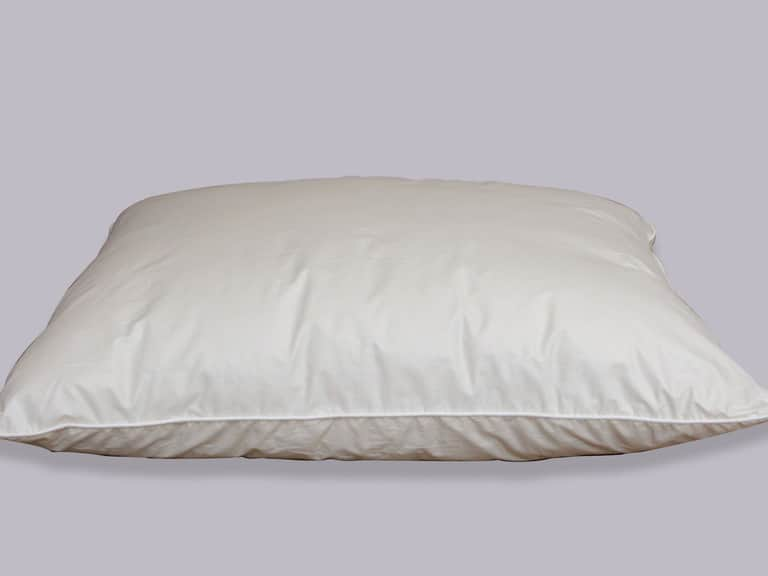
For a concrete example, an alpaca and wool pillow pairs alpaca fiber and wool batting with an organic cotton cover. Its description identifies the cotton as GOTS-certified. That is a helpful starting point, but a thoughtful assessment still asks which specific materials are certified, where each was sourced and what the certification covers. The aim is not to diminish the claim; it is to understand it precisely.
Trace the journey from farm to finished pillow
“Where is it made?” sounds like one question, but usually contains several. The place where a product is sewn may not be where its fibers were grown or raised. Fabric may be spun, woven, dyed or finished in separate locations before a pillow is assembled. Ask whether a brand can distinguish the origin of the raw fiber from the location of fabric production and final manufacturing.
Not every product page will supply a full map, and global supply chains can be genuinely complex. Still, meaningful sourcing information tends to be specific: a country or region, a named material, and an explanation of the processing or manufacturing stage involved. “Responsibly sourced” without any supporting detail is harder to evaluate than a clear statement of what the company knows—and what it does not.
For cotton, useful details might include whether the fiber is organic, where it was grown and where it was milled or woven. For wool, consider the source region and whether the supplier describes farming or animal-welfare practices. With down, ask about the origin of the feathers and how animal welfare is addressed. For kapok, ask where it is harvested and whether the product is processed or treated. No material has a single ethical profile; the practices behind it make a difference.
A good brand should be able to explain the limits of its knowledge, too. A company may know the origin of its cotton but have incomplete visibility into an upstream finishing process. Honest qualification is more credible than a sweeping promise that every stage is entirely transparent. The useful signal is a willingness to provide evidence and improve traceability over time.
Ask what a certification actually verifies
Certifications can make complex standards easier to navigate, but a logo should prompt questions, not end them. Different schemes address different materials and stages. Some focus on organic agricultural production; others may set requirements for processing, chemical inputs, product testing or chain-of-custody controls. A certification on the fabric does not necessarily certify the filling, and a product’s use of one certified component does not establish that every part meets the same standard.
GOTS and GOLS are among the labels that may appear in the natural-bedding market. Their relevance depends on the material and the scope of the claim. When you see either name, check what part of the pillow is covered and whether the product description identifies the certified fiber or component. OEKO-TEX Standard 100, where applicable, addresses testing of textiles for certain harmful substances; it should not be read as a blanket certification of organic farming or labor conditions. Standards evolve, so consult the certification body for current criteria and scope rather than relying on a retailer’s shorthand alone.
There is also a difference between a certification and a company’s own policy. An animal-welfare commitment, a regional sourcing statement or a claim that a product avoids certain materials can be meaningful, but it is not automatically an independent certification. Look for the name of the standard, the relevant product or component, and a way to verify the claim. If a retailer supplies only a general badge without context, ask for clarification before treating it as comprehensive evidence.
Careful language is especially important around health and safety. Terms such as “non-toxic,” “hypoallergenic” and “chemical-free” are often used loosely. No material can be described responsibly by sweeping language without clear definitions and supporting information. If you have a particular sensitivity, ask about the specific fiber, treatment or testing that matters to you, and consider seeking professional advice when a medical concern is involved.
For animal fibers, look beyond “natural”
Wool and alpaca are renewable animal fibers, but renewable does not mean impact-free. Questions worth asking include how animals are raised, how fiber is harvested, and whether the supplier has defined welfare practices. For wool, a brand may identify the sourcing region or explain its approach to farm relationships. For alpaca, the same principle applies: a clear account of origin and supplier expectations is more informative than an unqualified sustainability adjective.
Down and feathers require a distinct conversation. Ask where the material comes from and whether the supplier has a policy addressing animal welfare. If the company mentions an independent standard or audit, find out what it covers and whether it applies to the specific item. Recycled down and feathers can offer a route to extending the use of existing material, but recycled content alone does not answer every question about cleaning, sorting, traceability or product life.
Some shoppers prefer to avoid animal-derived fills; others prioritize durability, feel, or a particular sourcing standard. The point is not to prescribe a single choice. It is to make the trade-offs visible and let consumers decide according to their values and needs. A responsible description should state plainly when a product contains animal fibers, rather than hiding that information behind phrases such as “cloud-like” or “all-natural.”
Plant-based does not automatically mean uncomplicated, either. Cotton has a significant agricultural and processing journey; kapok requires harvesting and preparation; latex depends on both the source material and the way it is processed. Evaluating each fill on its own facts is more useful than arranging materials into a simplistic hierarchy of “good” and “bad.”
Labor belongs in the sourcing story
Ethical sourcing is not solely a question of what a fiber is made from. The people who grow, harvest, process, sew, package and transport bedding are part of its production story. Ask whether the brand shares information about manufacturing locations, supplier standards or worker protections. If it publishes a code of conduct, look for a description of how that code is monitored and what happens when standards are not met.
These answers may be harder to find than fiber content, but they are worth seeking. A factory location gives useful context, yet it does not, on its own, demonstrate fair treatment. Likewise, phrases such as “artisan made” or “fair trade” need explanation: who is included, what standard is used, and how is the claim verified? A specific, modest statement is often more credible than a broad promise that leaves its meaning undefined.
Consumers cannot independently audit every supply chain, nor should ethical shopping become an exhausting exercise in perfect certainty. Brands and manufacturers have greater access to supplier records and greater responsibility for communicating them. Your role can be simpler: notice what is disclosed, ask a reasonable question where information is missing, and reward clarity when you can.
Durability is an ethical consideration
The most sustainable pillow is not necessarily the one with the most elaborate label. It is also the one that performs well for its intended use and remains in service. A durable cover, a construction that can be maintained, and fill that can be adjusted or replaced may help an item adapt as preferences change. A pillow that is uncomfortable, impossible to care for or quickly loses its shape is less likely to become a long-term part of a home.
Before buying, ask how the pillow is constructed. Is the fill enclosed in a removable inner case? Can the loft be adjusted? Is the outer cover replaceable or washable? Can a seam be repaired, or can the filling be redistributed if it settles? The answer will vary by material. These practical details matter because a product’s environmental story continues after purchase.
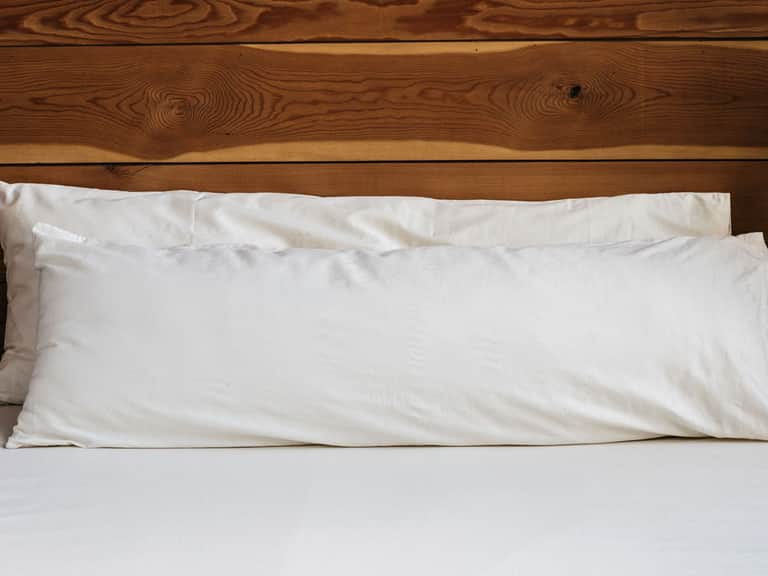
Adjustable wool and shredded-fill pillows illustrate one approach: the amount of fill can be changed to refine the height or firmness. A body pillow made with wool and an organic cotton sateen cover, such as the All-Natural Body Pillow, is described with distinct care guidance for the pillow and its separate case. That information helps set realistic expectations: the case can be washed, while the pillow itself is spot-clean only and may be refreshed by periodic airing or sunning, according to the product instructions.
Care instructions should be part of the purchasing decision, not an afterthought. Some natural fills should not be machine washed; others may require a removable cover, careful drying or professional laundering. Following the manufacturer’s guidance can help protect the fiber and maintain the pillow’s structure. If care seems impractical for your household, that is relevant information—not a personal failing.
Consider the cover, too
A pillow’s exterior is not merely a finishing touch. The cover is the surface closest to skin, the barrier that holds the fill in place and one of the components most likely to need cleaning. Check its fiber content, weave, finish and care requirements as carefully as you inspect the filling. A tightly woven shell may be important to a particular construction, but that feature does not replace clear information about fiber origin or certification.
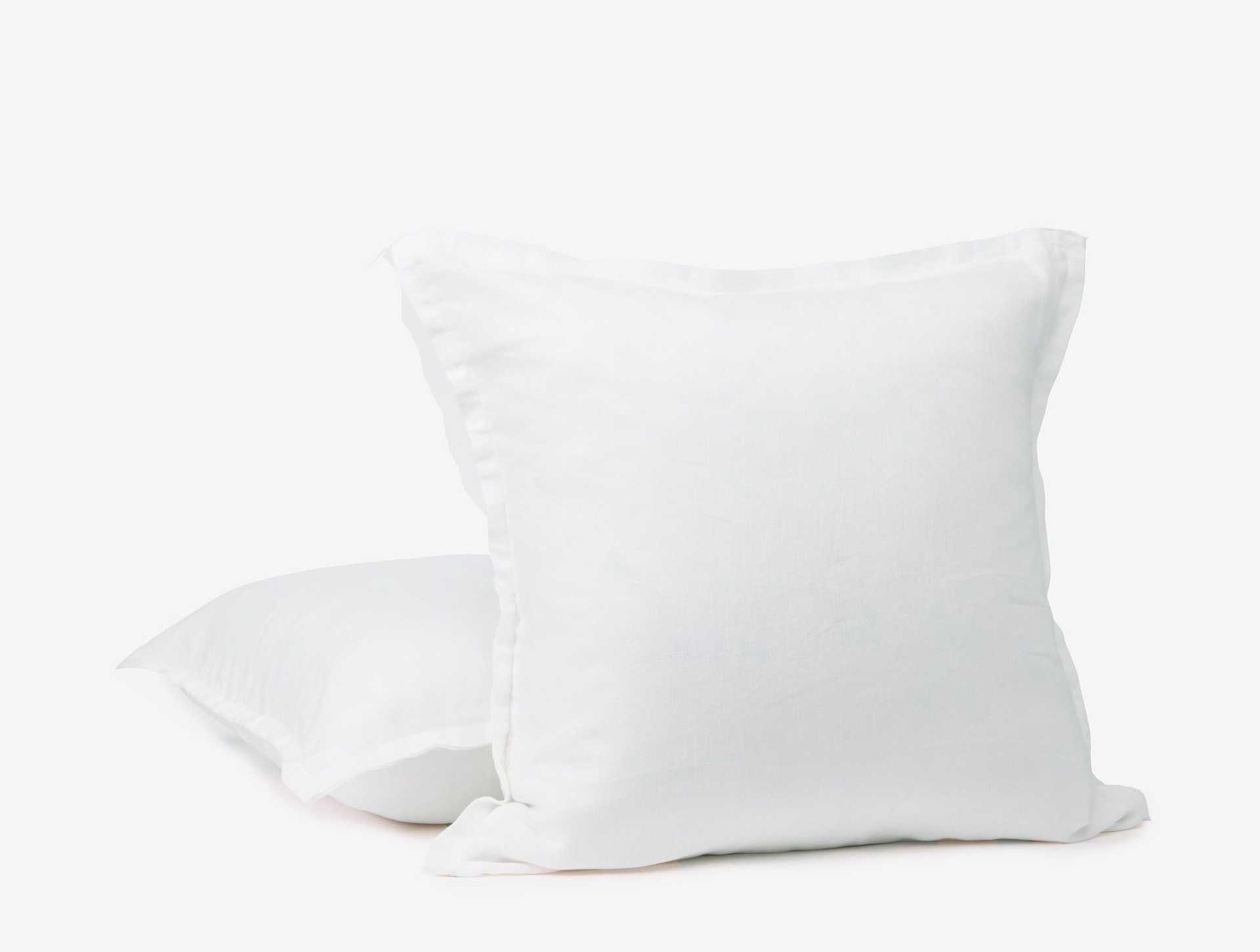
Decorative covers are especially useful when they can be refreshed without replacing the insert. A removable cover can make a cushion easier to maintain and change with the season, while a sturdy insert can stay in use. For example, the Organic Relaxed Linen Decorative Pillow Cover is described as GOTS-certified organic linen, with flax grown in France and fabric woven in Portugal. The stated care instructions explain how the cover can be washed. Those specifics allow a shopper to consider both provenance and everyday practicality.
Mixing and matching a durable cover with an insert that suits the intended use can also make replacement more selective. If one component wears out, it may be possible to retain the other. Ask whether the size is standard, whether a replacement cover is available and whether the insert is intended for sleeping, decorative support or both. An item used for display may have different performance needs from one that supports the head and neck nightly.
A concise checklist for the label
When you are comparing natural-fill bedding, use these questions as a calm, practical guide:
- What fibers make up the fill, inner liner and outer cover?
- Which components are certified, and what does each certification cover?
- Where were the fibers grown, raised or harvested?
- Where were the materials processed, and where was the finished pillow made?
- For animal fibers, what is disclosed about animal welfare and sourcing?
- For recycled materials, what percentage is recycled and how is it processed?
- What information is available about manufacturing and worker protections?
- How should the pillow be cleaned, aired, repaired or stored?
- Can the fill be adjusted, the cover replaced or the item repaired?
- What happens when the product reaches the end of its useful life?
Not every answer will be available on a product page. A concise description is not necessarily evidence of poor practice, but it does leave open questions. If the distinction matters to your decision, contact the retailer or manufacturer and ask for specific information. Notice whether the response addresses your question directly, offers supporting details and distinguishes what is known from what is not.
Buy with intention, not anxiety
Responsible home decor is less about collecting perfect products than about making choices with care. A pillow can meet one priority—organic fibers, animal-welfare information, local manufacturing, adjustability or ease of repair—without satisfying every possible standard. Your budget, comfort needs, allergies, household routines and values all matter. The most useful decision is one that recognizes those realities and avoids treating sustainability as a test of personal virtue.
Start with what you need. Choose a fill and profile that suit your sleeping position or decorative purpose. Read the care instructions before purchasing. Look for evidence behind meaningful claims, and favor brands that name materials and describe their supply chains with precision. When products are comparable, durability and the ability to maintain or adapt them are compelling advantages.
There is a particular elegance in an object that does not ask to be replaced at the next change of taste: a well-made pillow, a considered cover, a construction that can be cared for. Its appeal lies not only in softness or shape, but in the thoughtfulness built into its materials and its continued use. Asking sharper questions is how that thoughtfulness becomes visible.